
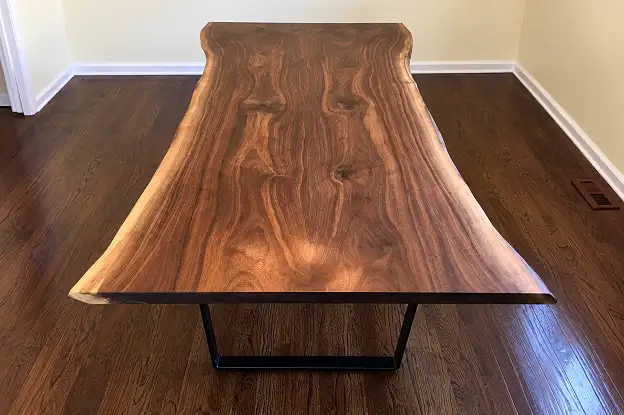
Modern interiors have a reputation for being clean, controlled, and carefully edited. Straight lines, quiet colors, smooth surfaces, and simple furniture tend to define the look. So a live-edge dining table might seem like an odd choice at first. The edge is naturally irregular, the grain refuses to follow a pattern, and every slab has its own quirks. But that contrast is often what makes the table work. A natural wood surface can soften a room built around stone, glass, metal, and cabinetry without making it feel rustic. When the wood, proportions, finish, and base are considered as one design, custom live-edge tables in the USA can bring warmth and character to a modern home without disturbing its clean aesthetic.
Natural Wood Brings Warmth Where Modern Rooms Need It
There is nothing wrong with a room full of polished surfaces. In fact, a well-designed contemporary interior can be incredibly inviting. Still, when too many surfaces are hard, smooth, and uniform, something can feel missing. Natural wood fills that gap quietly. The grain creates movement, the color has depth, and small variations keep the surface from looking flat. Walnut is especially good at this because it has enough richness to anchor a dining space while remaining remarkably versatile. We can keep the surrounding design simple and let the wood carry the visual interest. That usually feels more convincing than adding several decorative elements just to make the room look finished.
Live Edge Does Not Automatically Make a Room Rustic
This is one of those assumptions that is easy to make until a well-designed live-edge table is seen in a contemporary setting. The natural edge is only one part of the furniture. The base, finish, thickness, proportions, and surrounding materials all influence the final impression. A chunky base and heavily distressed finish may create a rustic feel, but a restrained finish and streamlined base can take the same natural material in a completely different direction. We do not need to disguise the irregular edge to make it sophisticated. We simply need to design around it. There is a difference between preserving the character of the wood and making the entire table look deliberately rough.
Start With the Slab, Not a Generic Shape
A natural slab should not be treated like a rectangular tabletop waiting to be cut into submission. Its grain, width, edge movement, knots, color changes, and overall character can all influence the finished design. We look at what the wood is naturally doing and then determine how the table can make the most of it. Sometimes the most interesting section of the grain suggests the orientation of the table. In another slab, the natural curve of the edge may become the feature that defines the piece. That approach tends to produce furniture with a stronger sense of identity. It also means the finished table feels connected to the material rather than simply covered in it.
Why Walnut Fits So Naturally Into Modern Homes
Walnut has an unusual ability to work across different interior palettes. It can bring contrast to a room with pale floors and white walls, while also holding its own among darker cabinetry, black fixtures, stone, and leather. Its grain has enough movement to be interesting but generally does not overwhelm the room. That balance makes custom walnut dining tables in the USA a practical choice for homeowners who want something distinctive without choosing a piece that will dictate every other design decision. A good finish can protect the surface and enhance its natural depth while leaving the grain visible. The wood should still look like wood. That sounds obvious, but it is an important distinction.
The Base Deserves More Attention
It is easy to focus entirely on the slab because that is what catches the eye first. Yet the base can change the personality of the entire table. A slim metal base can make a substantial tabletop appear lighter and more contemporary. A sculptural base can give the piece an architectural quality. A carefully proportioned wood base can create a quieter, more cohesive effect. We consider the relationship between the tabletop and base because neither should overpower the other. A beautiful slab can lose some of its impact when the base is too bulky, while an overly delicate base may make a heavy tabletop appear unbalanced. The best result usually comes from getting those proportions right and then leaving them alone.
Give the Table Some Breathing Room
A table with a strong natural shape does not need a dining room full of equally noticeable furniture. In fact, the room often looks better when the surrounding pieces are quieter. Clean-lined chairs can provide contrast without competing with the grain. Simple lighting can draw attention to the surface without becoming the main attraction. A few well-chosen accessories are usually enough. Practical details matter here too, especially in a room used every day. We want enough space to pull out chairs, walk comfortably around the table, and appreciate the shape of the slab from different angles. A little restraint goes a long way. A few design choices can help keep the balance right:
- Pair a distinctive tabletop with chairs that have simple, comfortable silhouettes.
- Choose lighting that highlights the wood without creating harsh reflections.
- Keep decorative pieces limited so the grain remains visible.
- Leave sensible clearance around the table for everyday movement.
- Let nearby finishes coordinate without trying to make every material identical.
The room should feel collected, not matched.
Custom Design Makes the Furniture Fit the Home
Standard dining tables are built around standard assumptions. Rooms, of course, are rarely that cooperative. One dining area may need a longer table because it regularly hosts family gatherings. Another may have an unusual footprint that makes conventional dimensions awkward. Some homeowners simply want a table with a particular presence that cannot be found in a showroom. Custom furniture gives us room to work with those realities. At Fredric Blum Design, the process can take into account the dimensions of the space, seating requirements, preferred style, and natural characteristics of the selected wood. That matters with live-edge furniture because the slab itself can influence what the final table should become.
Natural Imperfections Are What Make the Table Interesting
A live-edge table is not supposed to look manufactured. The grain may shift direction. A knot might sit in a prominent spot. One section may be warmer or darker than another. The edge may widen and narrow as it follows the natural shape of the tree. Those details are not inconveniences to be corrected. They are the reason the table has character. We can smooth, finish, and protect the wood, but preserving some of its individuality is part of the appeal. After all, if complete uniformity is the goal, there are plenty of manufactured surfaces that can provide it. Natural wood offers something else.
A Well-Made Table Can Outlast Interior Trends
Paint colors change. Chairs get replaced. Kitchens are renovated. Lighting styles come and go. A thoughtfully made wood table can remain useful through all of those changes. That is particularly valuable when the table is substantial enough to become part of the home’s history. Custom live-edge tables in the USA can adapt because their appeal does not depend entirely on one decorating trend. The surrounding room can become more minimalist, more traditional, or more relaxed while the natural wood continues to make sense. With good proportions and durable craftsmanship, the table becomes less of a seasonal purchase and more of a lasting piece of furniture.
Conclusion
The strongest modern interiors are not always the ones where every surface follows the same rule. A little contrast gives a room depth. Straight architectural lines can look better beside an organic edge. Smooth stone becomes warmer beside natural grain. Minimal furniture can feel more welcoming when there is one substantial piece with visible character. That is where a live-edge table earns its place. It does not need to look traditionally rustic, and it does not need to imitate factory-made furniture to feel modern. It simply needs thoughtful design and good craftsmanship. If you are considering a custom dining table for a contemporary home, contact us today to discuss your space, the character of the wood, and the design that could bring the two together naturally.
FAQs
1. Can a live-edge table work with minimalist furniture?
Yes, simple chairs and understated décor can create a clean contrast that lets the natural wood remain the focal point.
2. What type of base works best with a live-edge table?
A streamlined metal, sculptural, or well-proportioned wood base can complement the slab without overpowering its natural character.
3. How do you choose the right live-edge slab for a dining table?
We consider the grain, natural edge, dimensions, and unique features of the slab before shaping the final table.
4. Can walnut furniture complement light-colored interiors?
Yes, walnut adds depth and warmth to spaces with light walls, flooring, cabinetry, and other neutral finishes.
5. Can a custom live-edge table be designed for a specific room?
Yes, custom dimensions allow us to consider the room layout, available space, seating needs, and overall design.