
Most people spend more time choosing a paint color than choosing their table wood. That is understandable. Wood species feel technical until you have worked with them long enough to understand what each one is really like. At Fredric Blum Design, the wood conversation happens early in every commission because it shapes everything that follows. Walnut, oak, and cherry are the three species I am asked about most often. They are all beautiful. Knowing the differences helps you decide which one to choose.
Here is how I think about each one after more than 60 years of working with them.
Walnut
Walnut is the wood people picture when they imagine a serious dining table. The color is rich and dark from the start, ranging from chocolate brown to cooler tans depending on the piece. The grain tends to be straight with an occasional figure that catches light in a way that feels quietly dramatic.
What makes walnut particularly well suited to large slab work is its stability. It moves predictably with seasonal humidity, which matters more than most buyers realize when you are building around a single piece of wood that wide. The surface takes a restrained finish beautifully, allowing the natural depth of the grain to stay visible rather than disappearing under a heavy coat.
Walnut does not need much to look extraordinary. That is part of why it works so well in handcrafted live edge tables, where the material is doing most of the visual work.
White Oak
White oak is classic and traditional. The color is lighter, leaning toward warm tans and pale golds, and the grain has a distinctive ray fleck pattern that becomes more visible with certain cuts. It reads as grounded and natural in a room. It is often less formal than walnut but no less beautiful, and responds well to white oak.
White oak holds up extremely well under daily use. It is hard, resistant to wear, and ages gradually without dramatic color shifts. Rooms that feel best with lighter, more open tones often respond well to white oak. It also pairs naturally with a wide range of chair styles and interior palettes, which gives it flexibility that some clients find appealing when they are not certain how the rest of the room will develop over time.
Cherry
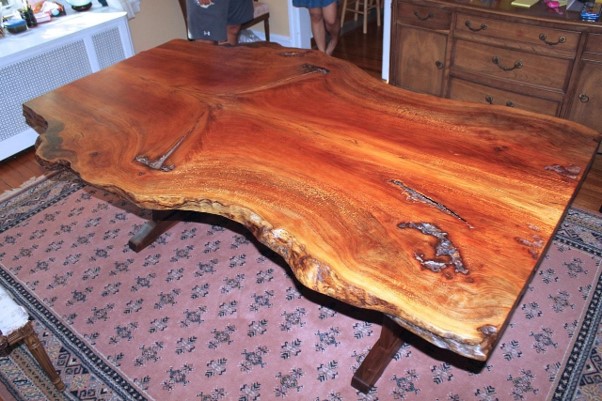
Cherry is a different kind of commitment, and I mean that as a compliment. Fresh-milled cherry is pale, almost pinkish, and buyers sometimes hesitate when they see it early in the process. Then it darkens. Over months and years of exposure to light, cherry develops a deep, dark red warmth that no stain can replicate and no other wood quite matches.
That transformation is genuinely part of owning the piece. Live-edge cherry dining tables become more beautiful with time, in a way. The grain is fine and smooth, the surface responds well to hand-finishing, and the overall character of the wood is warm and personal in a way that suits kitchens and dining rooms equally well.
Clients looking at custom cherry dining tables in the USA are usually drawn to that aging quality once they understand it. The table you have in ten years looks richer than the one that arrived on delivery day.
Which One is Right for Your Table?
That depends on your room, your light, and your temperament. Walnut suits people who want immediate presence. Oak suits people who want durability and visual versatility. Cherry suits people who want something that grows with them.
The best way to decide is to talk through it. I send photos of actual slabs being considered for your commission, which makes the choice concrete rather than abstract. You can browse completed work across all three species at fredricblumdesign.net/completed-commissions to get a feel for how each one looks in a finished piece.
Start the Conversation
Every table Fredric Blum Design build begins with a discussion about the wood. If you are drawn to walnut, oak, cherry, or something else entirely, reach out and we will find the right slab for your space.
Frequently Asked Questions
Q: Can I see slab options before committing to a wood species?
Yes. For every commission, I search for slabs suited to your preferences and send photos for your review. You are not committing to anything until the price is accepted.
Q: Does cherry really change color that much over time?
It does, and most clients love it. Cherry develops a deep red warmth through natural light exposure that makes the table more visually rich over time. It is one of the most cherished woods to own long-term.
Q: Which wood is most durable for everyday family use?
All three hold up well when properly finished. Oak is the hardest of the three and the most resistant to surface wear. Walnut and cherry both perform well in active households with the right finish applied.
Q: Is there an additional cost for one species over another?
Pricing depends on the specific slab selected, its size, and availability rather than species alone. I provide a full price estimate during the design conversation before any commitment is made.